Skip to main content

How to Report Medicare Fraud: 8 Steps Before You File

Table of Contents
The Direct Answer
You can report suspected Medicare fraud to Medicare or HHS-OIG. But a direct tip is not the same as filing a False Claims Act qui tam lawsuit and usually does not create a 15%-30% relator share. A separate CMS direct-tip reward exists, but it is discretionary and capped at the lesser of 10% of recovered overpayments or $1,000. If you have systemic insider evidence and care about reward eligibility, confidentiality, or retaliation, speak with counsel before reporting.
Medicare fraud reporting is not one-size-fits-all. A beneficiary disputing one charge has a different objective from a medical coder who knows a company has submitted thousands of false claims. The path you choose can affect the investigation, your employment, the handling of evidence, and whether a reward-eligible qui tam claim remains available.
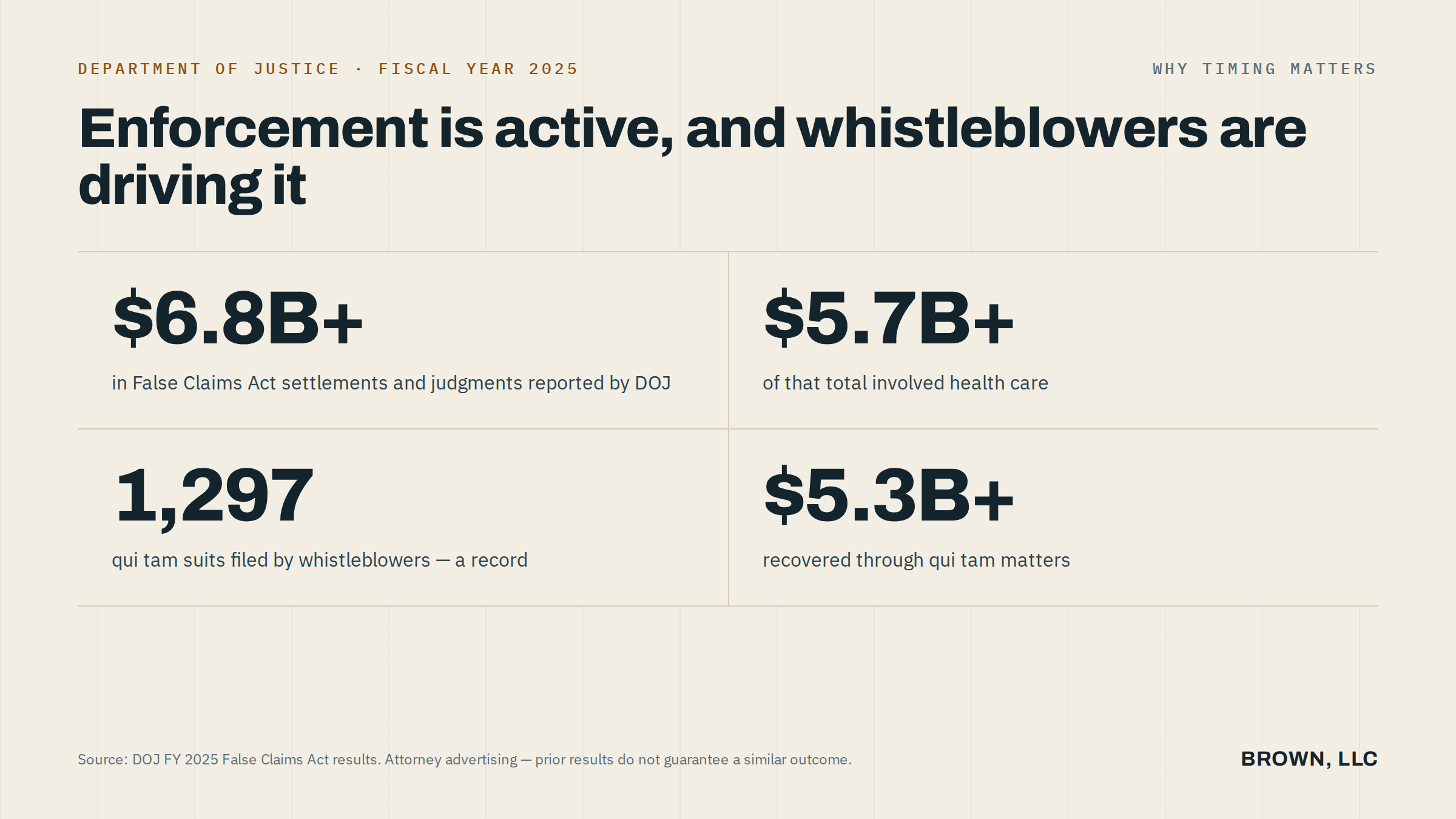
Enforcement is active. DOJ reported more than $6.8 billion in False Claims Act settlements and judgments in fiscal year 2025, including more than $5.7 billion involving healthcare. Whistleblowers filed a record 1,297 qui tam suits, and qui tam matters produced more than $5.3 billion in recoveries.
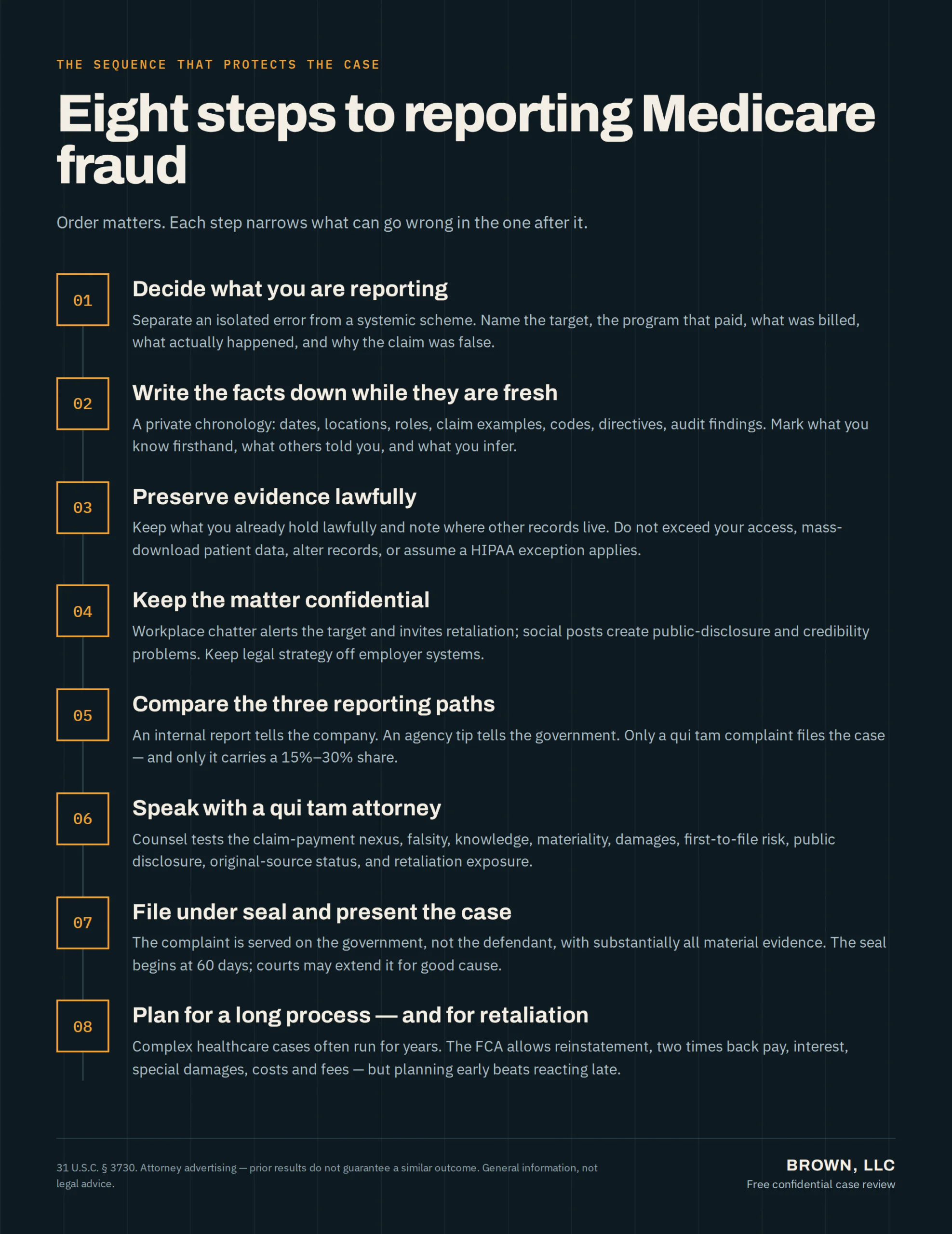
Step 1: Decide What You Are Reporting
Start by separating an isolated error from a potentially systemic scheme. Identify the provider or company, the government program that paid, what was billed, what actually occurred, why the claim was false, and whether the conduct was knowing. Upcoding, phantom billing, medically unnecessary care, unsupported Medicare Advantage diagnoses, kickbacks, home health or hospice eligibility fraud, telehealth and DME schemes, and laboratory fraud can support FCA cases when they cause knowingly false government claims. A technical violation without a material payment nexus may not.
Step 2: Write Down the Facts While They Are Fresh
Prepare a private chronology. Include dates, locations, names, job roles, claim examples, billing or diagnosis codes, patients or de-identified examples, payors, directives, audit findings, prior warnings, and how frequently the conduct occurred. State what you personally know, what another person reported, and what you infer. Do not turn assumptions into facts. The strongest summary answers who, what, when, where, how, how you know, and the likely scope.
Speak with the Lawyers at Brown, LLC Today!
Over $1 billion in aggregate judgments and settlements for our clients in state and federal courts. We fight for maximum damages and results.
Step 3: Preserve Evidence Lawfully
Keep documents and communications you already possess lawfully and identify where other records are maintained. Do not access data outside your authorization, mass-download patient records, assume a HIPAA exception applies, take privileged legal material without advice, alter records, or destroy anything. The right evidence plan depends on your role, the records, privacy law, employment duties, and the jurisdiction. Obtain legal guidance before collecting more.
Related: Brown, LLC secured two of the year’s largest individual recoveries — a $950M settlement against Raytheon and $350M against Walgreens. Learn about our False Claims Act practice →
Step 4: Keep the Matter Confidential
Broad workplace discussions can alert the target, change records, prompt retaliation, or lead another person to file. Social media posts can create public-disclosure and credibility problems. Limit communications to people who need to know. Do not use employer systems for legal strategy. Confidentiality is not secrecy forever, but disciplined communications preserve more options.
Step 5: Compare the Three Reporting Paths
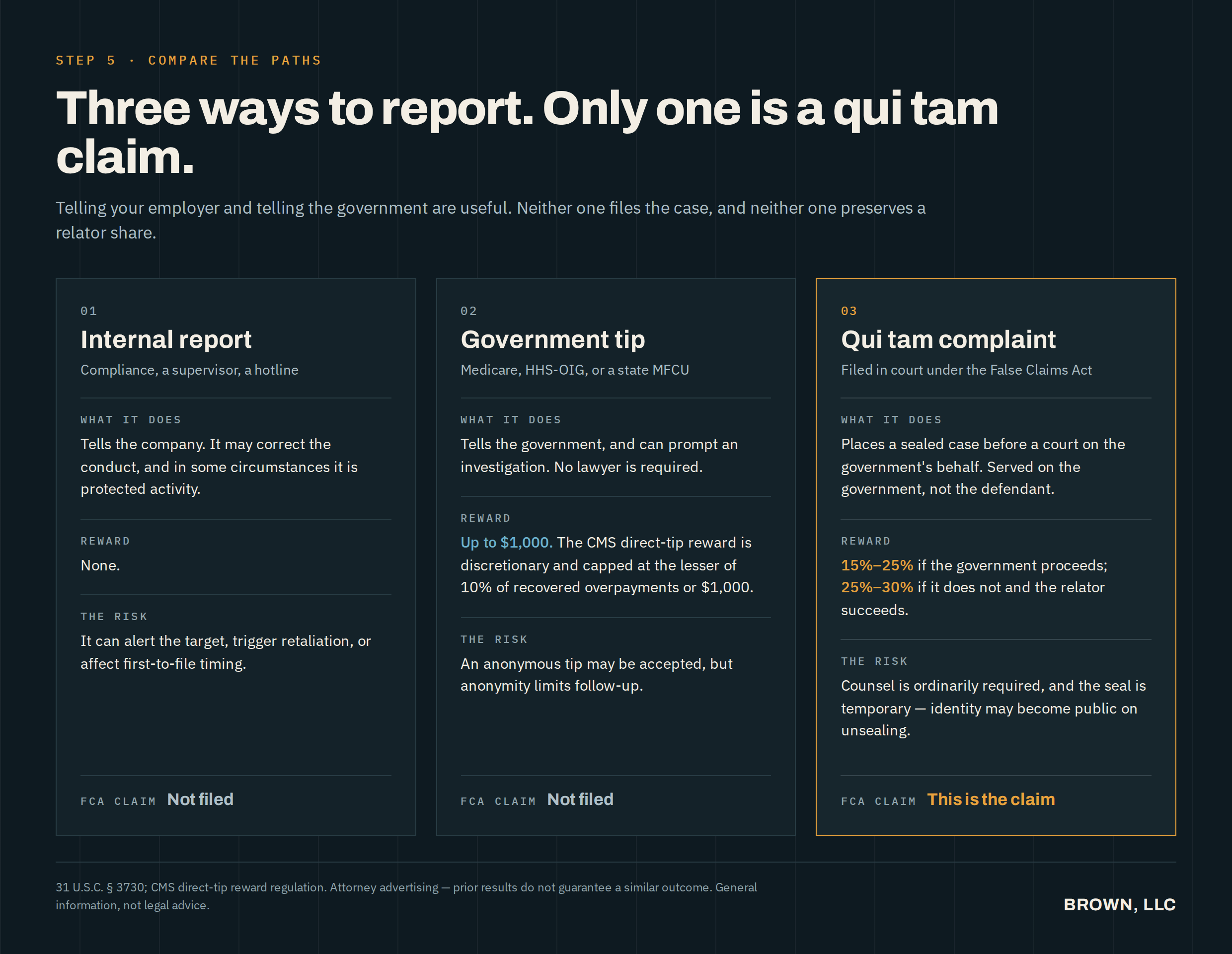
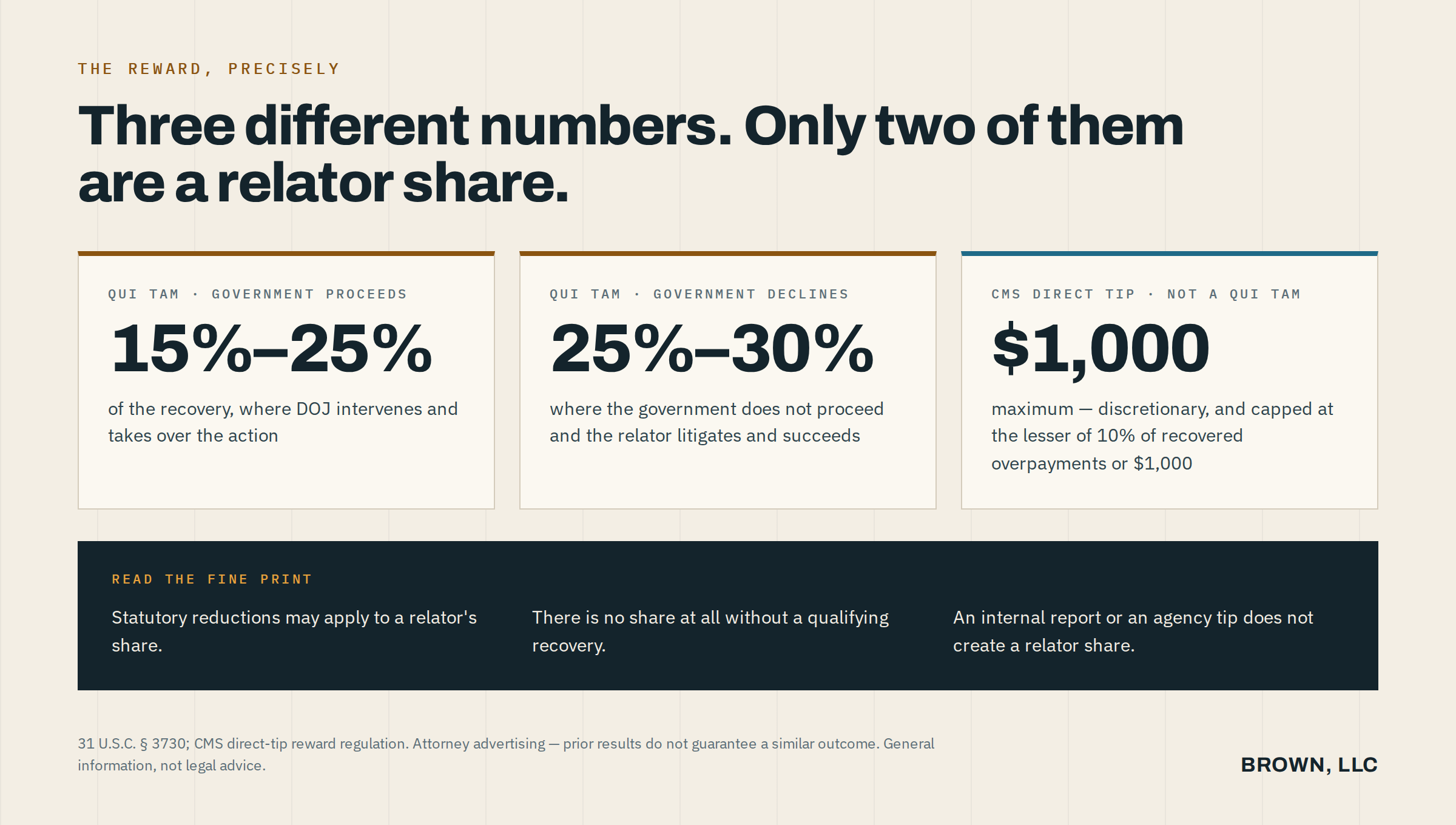
An internal report tells the company. A Medicare, HHS-OIG, or MFCU tip tells the government. A qui tam lawsuit places a sealed case in court on the government’s behalf. The first two routes can help stop wrongdoing, but neither substitutes for an FCA complaint. CMS’s separate direct-tip reward is discretionary and capped at $1,000. A successful FCA case generally permits 15%-25% when the government proceeds and 25%-30% when it does not and the relator succeeds.
Step 6: Speak With a Medicare Fraud Whistleblower Attorney
A qualified qui tam lawyer should test the claim-payment nexus, falsity, knowledge, materiality, scope, damages, first-to-file risk, public disclosure, original-source status, evidence, and retaliation exposure. The lawyer should also tell you when the facts do not support an FCA case. Brown, LLC is led by former FBI Special Agent and Legal Advisor Jason T. Brown, includes former DOJ attorneys, and offers free confidential whistleblower case reviews.
Step 7: File Under Seal and Present the Case to the Government
If the evidence supports a qui tam action, counsel files the complaint under seal and serves the government, not the defendant. The relator also provides the government with substantially all material evidence and information. DOJ, a U.S. Attorney’s Office, HHS-OIG, the FBI, state Medicaid authorities, and other agencies may investigate, request documents, analyze claims, and interview the relator. The statutory seal begins at 60 days, but courts may grant extensions for good cause.
Step 8: Prepare for a Long Process and Possible Retaliation
The government may intervene, decline, seek more time, or resolve the matter another way. Complex healthcare cases often take years, but there is no guaranteed seal period or timeline. The FCA protects employees, contractors, and agents from retaliation for qualifying protected conduct and permits remedies including reinstatement, two times back pay, interest, special damages, costs, and attorneys’ fees. Legal remedies are important, but early career and financial planning is better than reacting after retaliation occurs.
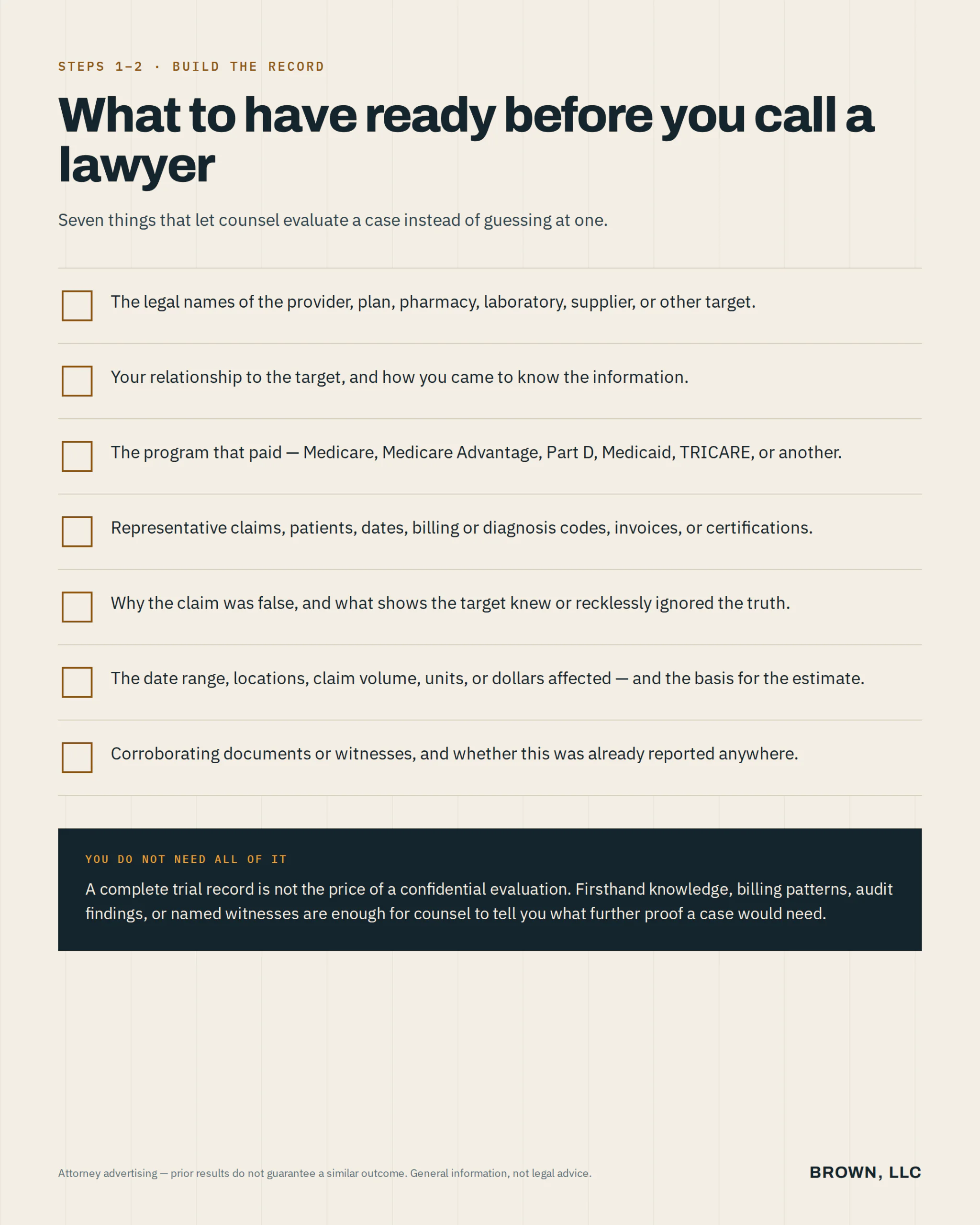
What Information Should You Have Ready?
- The legal names of the provider, plan, pharmacy, laboratory, supplier, or other target.
- Your relationship to the target and how you learned the information.
- The Medicare, Medicare Advantage, Part D, Medicaid, TRICARE, or other government program involved.
- Representative claims, patients, dates, codes, invoices, certifications, or other concrete examples.
- Why the claim was false and evidence that the target knew or recklessly ignored the truth.
- The approximate date range, locations, claim volume, patients, units, or dollars affected – and the basis for the estimate.
- Documents or witnesses that can corroborate the conduct, and whether the information was already reported internally, to government, to media, or to another lawyer.
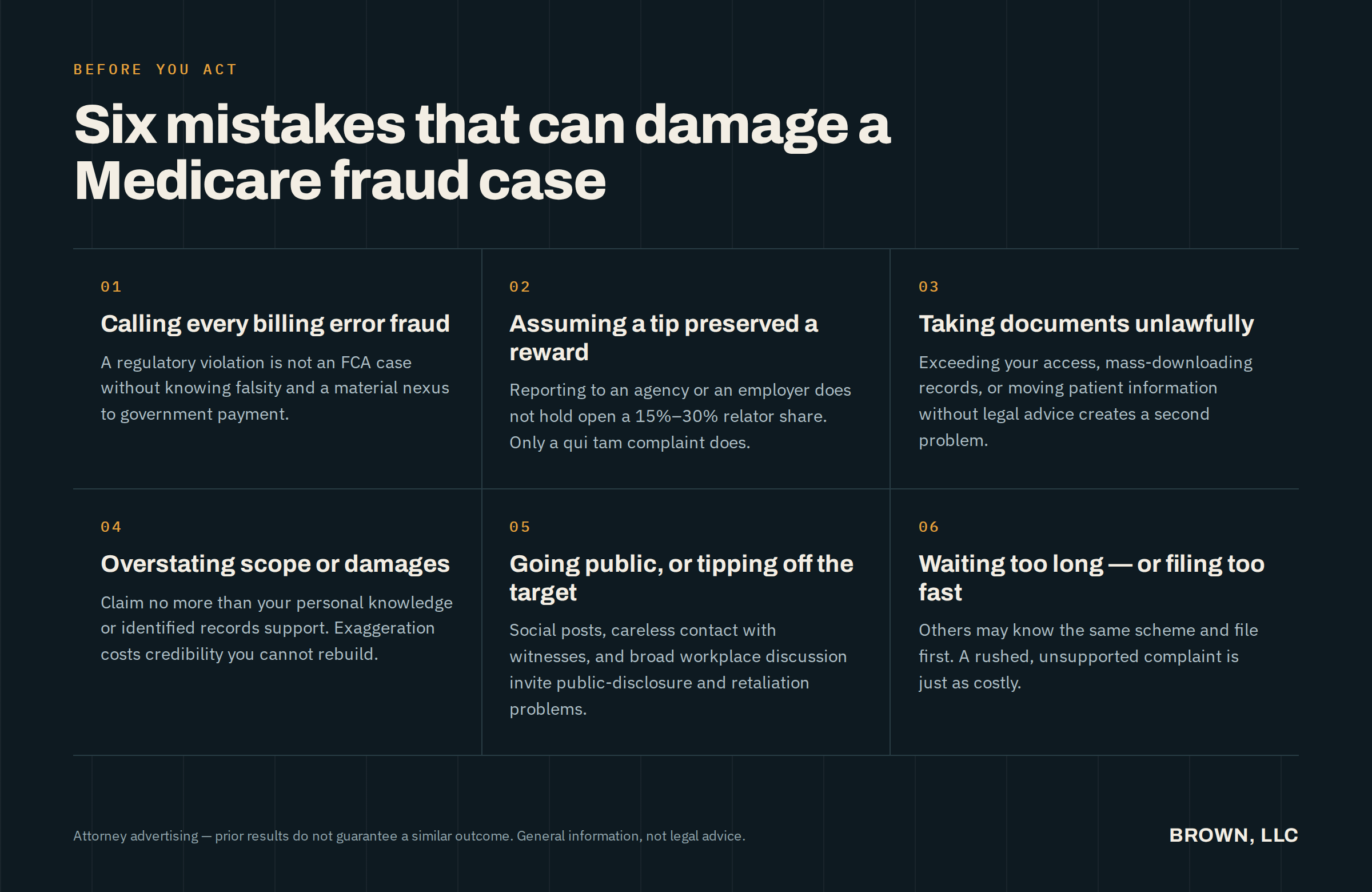
Common Mistakes That Can Damage a Medicare Fraud Case
- Treating every billing error or regulatory violation as fraud without showing knowing falsity and a material government-payment nexus.
- Reporting to an agency or employer and assuming that the report preserved a 15%-30% FCA reward.
- Taking documents unlawfully, violating access restrictions, or moving patient information without legal advice.
- Exaggerating scope or damages beyond what personal knowledge or identified records support.
- Posting accusations publicly, contacting witnesses carelessly, or alerting the target before an evidence and retaliation plan exists.
- Waiting unnecessarily when other people know the same scheme, while also rushing an inadequately supported complaint.
Frequently Asked Questions
Can I report Medicare fraud anonymously?
An agency may accept an anonymous tip, although anonymity can limit follow-up. A qui tam complaint is filed under seal and is confidential at first, but it is not guaranteed to remain anonymous permanently. The relator’s identity may become public when the case is unsealed, litigated, or resolved.
Speak with the Lawyers at Brown, LLC Today!
Over $1 billion in aggregate judgments and settlements for our clients in state and federal courts. We fight for maximum damages and results.
Do I need a lawyer to report Medicare fraud?
You do not need a lawyer to call Medicare or submit an HHS-OIG tip. A qui tam action is different because the relator asserts claims on the government’s behalf and ordinarily must be represented by counsel. Legal advice before any report can also address evidence, first-to-file, public disclosure, confidentiality, and retaliation.
What is the reward for reporting Medicare fraud?
A successful federal qui tam action generally permits 15%-25% if the government proceeds and 25%-30% if the government does not proceed and the relator succeeds. Statutory reductions may apply, and there is no share without a qualifying recovery. CMS’s separate direct-tip program is discretionary and capped at $1,000.
What if I suspect fraud but cannot prove every claim?
You do not need a complete trial record to request a confidential evaluation. You should have specific facts and a reasonable basis for the claim and scope. Representative examples, firsthand knowledge, billing patterns, communications, audit findings, policies, or identified witnesses can allow counsel to evaluate what additional proof is needed.
Whistleblower tip: If you’ve witnessed Medicare or Medicaid billing fraud at your employer, you may qualify as a qui tam relator with a potential share of the government’s recovery. See our Medicare & Medicaid fraud practice →
Should I report internally before filing?
Not automatically. Internal reporting may help correct misconduct and may be protected in some circumstances, but it can also trigger retaliation, alert the target, or affect first-to-file timing. The correct sequence depends on the facts, your role, the employer, and the evidence.
Sources: DOJ FY 2025 FCA results; 31 U.S.C. § 3730; Medicare.gov reporting; HHS-OIG reporting; CMS direct-tip reward regulation
Prior results do not guarantee a similar outcome. This article provides general information, not legal advice. Providing information to Brown, LLC does not create an attorney-client relationship; representation begins only through a signed written agreement.