 Skip to main content

Supreme Court Invalidates IEEPA Tariffs: What It Means for Customs Fraud and False Claims Act Enforcement, Part 1
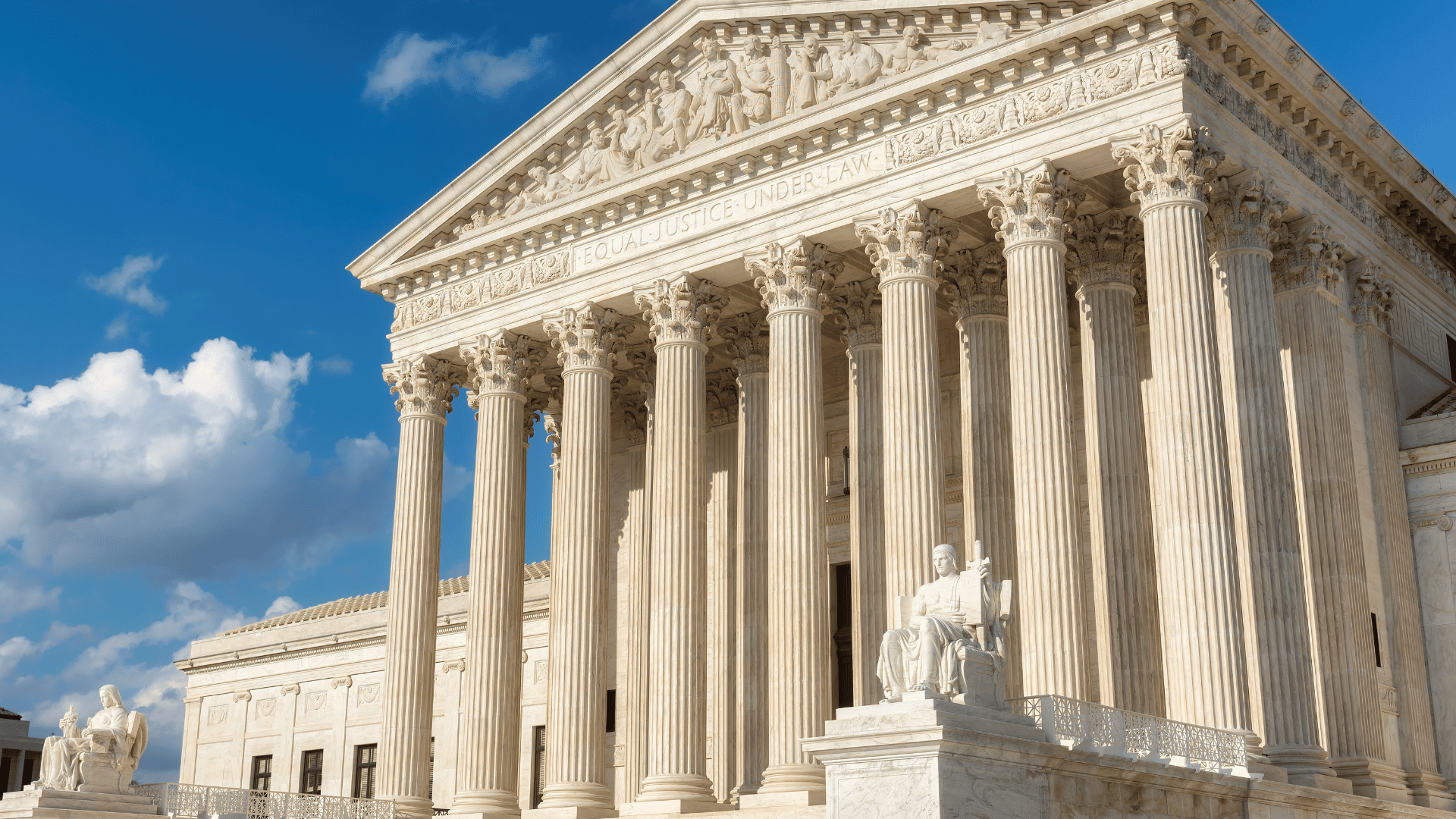
Table of Contents
In a major Supreme Court tariff ruling issued February 20, 2026, Learning Resources, Inc. v. Trump, 607 U.S. ___ (2026), the Supreme Court held that the International Emergency Economic Powers Act (IEEPA) does not authorize the President to impose tariffs, invalidating sweeping “reciprocal” (trade-deficit) tariffs and “drug trafficking” tariffs that had been imposed and modified under IEEPA.
For customs fraud and False Claims Act (FCA) exposure, the decision’s most immediate litigation consequence is conceptual and practical: FCA cases premised solely on evasion of “IEEPA tariffs” face a defense argument that there was no lawful “obligation” to pay those duties, undermining the “reverse false claim” theory (avoiding an obligation to pay the Government).
Speak with the Lawyers at Brown, LLC Today!
Over $1 billion in aggregate judgments and settlements for our clients in state and federal courts. We fight for maximum damages and results.
At the same time, the ruling is not a “get out of customs compliance free” card. Customs duty obligations can still arise under other tariff statutes and trade-remedy regimes (including AD/CVD tools), and longstanding enforcement authorities, civil and criminal, remain available for false statements, misclassification, undervaluation, and false origin declarations.
Common Tariff Evasion Schemes: Transshipment, Misclassification, and Concealment
Even before the Supreme Court’s ruling in Learning Resources, Inc. v. Trump, companies facing significant tariff exposure often adopted aggressive strategies to reduce or eliminate duty liability. Many of these schemes were not novel. They reflected longstanding customs fraud patterns, repackaged for a high-tariff environment.
Transshipment and False Country of Origin
One of the most common mechanisms was transshipment. In its simplest form, goods manufactured in a high-tariff country were routed through a third country and relabeled as originating there. Minimal processing occurred. Sometimes there was none at all. The paperwork changed, not the product.
For example, goods produced in Country A subject to elevated tariffs would be shipped to Country B. A shell distributor in Country B would issue a new invoice. A certificate of origin might be generated. The goods would then enter the United States declared as originating from Country B, thereby avoiding the higher tariff rate applicable to Country A.
If the IEEPA tariffs are now deemed invalid, a defendant may argue that any evasion of those specific duties caused no legally cognizable loss to the Government because there was no valid “obligation” to pay them in the first place. That argument directly targets the “reverse false claim” theory under 31 U.S.C. § 3729(a)(1)(G).
But that does not end the inquiry.
If the same conduct involved false origin declarations, false statements to Customs, falsified commercial invoices, or concealment of material import data, those misrepresentations may independently violate federal law. The falsity does not disappear simply because the specific tariff regime is later invalidated. The question becomes: what lawful obligation, if any, attached to the goods at entry?
Misclassification and Undervaluation
Other companies pursued misclassification schemes. Products subject to higher duty rates were declared under Harmonized Tariff Schedule categories carrying lower rates. Internal communications sometimes revealed deliberate re-engineering of product descriptions to fit a cheaper classification code.
Undervaluation was another tactic. Importers reported transaction values below actual price. Rebates, side payments, or transfer pricing adjustments were concealed. In some cases, importers bifurcated invoices to make the declared customs value appear lower than the true economic consideration.
Again, where the only duties implicated were those imposed under IEEPA and now invalidated, FCA damages theories may be materially truncated. But if the misclassification or undervaluation affected other lawful duties, including antidumping or countervailing duties, the exposure remains.
False Certifications and Concealment
A third pattern involved false certifications. Importers certified compliance with customs laws, declared origin and value under penalty of perjury, and submitted documentation that did not reflect reality. Some entities instructed brokers to “avoid putting certain things in writing.” Others directed suppliers to modify labels or production records to support a preferred country of origin narrative.
From an FCA perspective, this raises a different issue. Even if the underlying tariff obligation is later determined not to have existed under IEEPA, the submission of knowingly false records may still have legal consequences. The damages analysis may shift, but the conduct can still support liability if tied to an independent statutory or regulatory duty.
Post-Ruling FCA Implications: Damages, Obligation, and Inchoate Theories
The Supreme Court’s holding that IEEPA did not authorize tariffs significantly alters the damages framework in cases predicated solely on those duties. Under the FCA, a reverse false claim requires an “obligation” to pay money to the Government. If the statute never authorized the tariff, defendants would argue there was no legally cognizable obligation.
That defense is strongest where:
- The only alleged loss consists of unpaid IEEPA tariffs.
- No alternative tariff statute applied.
- No separate false statement theory exists independent of the invalid tariff.
In those cases, damages may be reduced to zero, or at least dramatically narrowed.
However, even where actual damages tied to unpaid IEEPA tariffs are reduced or eliminated, the False Claims Act still authorizes mandatory civil penalties for each false claim or false statement. Under 31 U.S.C. § 3729, liability includes a per-violation penalty—currently in the five-figure range per entry, adjusted annually for inflation—independent of treble damages. In the customs context, each import entry, certification, or materially false invoice can be characterized as a separate violation. That said, penalty-only cases will face materiality scrutiny under Universal Health Services, Inc. v. United States ex rel. Escobar, particularly where the Supreme Court has determined that the underlying tariff obligation was not lawfully authorized.
Therefore, courts may confront a more nuanced question. What if the defendant believed the tariffs were valid at the time of entry? What if the defendant deliberately falsified documentation to avoid what it understood to be a lawful obligation? Does subsequent invalidation retroactively eliminate FCA exposure?
This resembles, conceptually, an inchoate offense analysis in criminal law. An attempt can be punishable even if the completed offense would ultimately prove impossible. The theory is not perfect in the civil FCA context, but the analogy is instructive.
If an importer knowingly falsified records to avoid paying what it believed to be a lawful duty, one could argue that the fraudulent act itself remains actionable, even if the underlying tariff regime collapses. The damages may be limited. But the false statement, concealment, or obstruction could independently violate customs statutes or support FCA liability under alternative theories.
The viability of that approach will likely depend on:
- Whether a separate statutory duty existed at the time of entry.
- Whether the misrepresentation was material to Government payment or collection decisions.
- Whether the Government actually relied on the falsified information in assessing duties.
Practical Litigation Consequences
For whistleblowers and relators, the key lesson is precision. Future customs fraud cases must clearly identify the statutory basis for the duty obligation. Pleadings that generically reference “tariffs” without specifying whether they arose under IEEPA or another trade statute risk early dismissal.
For defendants, the ruling provides a potent motion-to-dismiss argument in legacy cases built entirely on IEEPA tariff evasion. Expect renewed briefing on the definition of “obligation,” causation, and damages under the False Claims Act.
For compliance officers, the ruling does not reduce risk. It refocuses on it. False origin declarations, document falsification, and valuation manipulation remain core enforcement targets. Customs and Border Protection retains civil penalty authority. The Department of Justice retains criminal tools. The invalidation of IEEPA tariffs does not immunize fraudulent import conduct.
Bottom Line for Customs Fraud and FCA Enforcement
The Supreme Court’s decision in Learning Resources, Inc. v. Trump narrows one category of tariff-based FCA exposure. It does not dismantle customs fraud enforcement.
Where cases rest solely on unpaid IEEPA tariffs, damages theories may collapse. But where companies engaged in transshipment, misclassification, undervaluation, or falsified certifications, liability may persist under other duty regimes and independent false statement theories.
In short, the tariff authority question may be resolved. The customs fraud question is not.
For companies operating in high-risk import sectors, the compliance mandate remains unchanged: accurate classification, truthful origin reporting, complete valuation disclosures, and documented internal controls. For whistleblowers evaluating potential FCA claims, the analytical starting point is still there, if the company believes its functionally evading tariffs, real or imagined, you need to speak with a customs fraud whistleblower lawyer.
The Supreme Court curtailed executive tariff authority. It did not curtail the False Claims Act.